
In Honduras, 105 journalists have been killed in the last two decades, and in 92% of the cases there was never justice, according to the Committee for Free Expression.
The Foundation for Justice will present a video in which a journalist, the co-founder of a Honduran media outlet, and the director of the Committee for Free Expression explain why silencing the press is an attack on all of society.
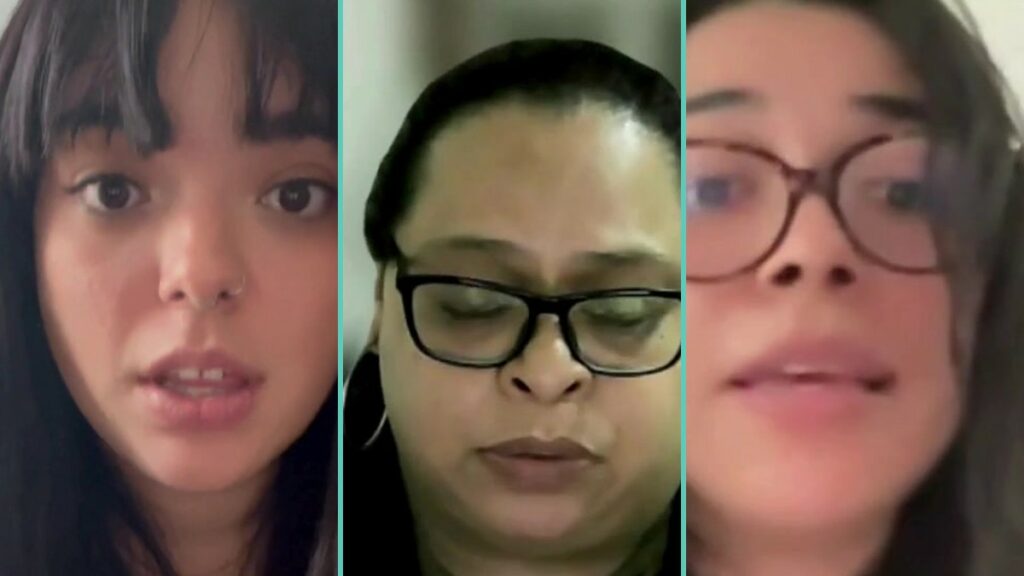
Journalists Carmen Valeria Escobar, Amada Ponce and Jennifer Ávila
When organized crime takes over the State
For years, Honduras was one of the main routes for cocaine to the United States. In 2024, its former president, Juan Orlando Hernández, was convicted of drug trafficking by a United States court.
According to the Journalist Carmen Valeria Escobar says that when organized crime takes over the state, the consequences go far beyond drug trafficking."In those territories, silence is not always imposed through censorship; often it is imposed through fear. There are communities where investigating power can cost you your life.".
2010, the toughest year for the press
For Amada Ponce, executive director of the Committee for Free Expression, The worst moment came after the 2009 coup, which ousted President Manuel Zelaya Rosales from power. Ten journalists were murdered in 2010. Many of them had denounced the breakdown of the country's institutions. According to Ponce, at that time «"Private companies, banks, and the government conspire, let's put it that way, and impose territories of silence.".
Those who investigate corruption are in danger.
According to Carmen Valeria Escobar, this power of organized crime within the State also extends to those who investigate corruption, denounce abuses, or report what happens in territories controlled by political and criminal power.
According to the journalist, «Violence against journalists is rarely an isolated incident. It is deeply linked to corruption, impunity, and criminal structures that have penetrated various state institutions.".
The return of the former president
Jennifer Ávila, co-founder of the Honduran media outlet Contracorriente, He adds another recent fact: the US president pardoned Juan Orlando Hernández, who has returned to Honduras in person "with a political movement heavily based on religion." According to Ávila, "In other countries, we see the figure of someone who comes from outside the political sphere. In Honduras, it's more of a recycling of a figure who has been extremely polarizing, like Juan Orlando Hernández.".
105 journalists murdered, almost none with justice.
In Honduras, violence against journalists is closely linked to corruption, the struggle for control of territories, and the economic interests that prevail in different areas of the country.
The data from the Committee for Free Expression clearly shows this: 105 journalists murdered in the last two decades. In 92% of the cases, there was never justice.
The ability to decide
When asked what a society like Honduras loses when its journalists are silenced, Amada Ponce answers with four words: "The ability to decide."«. Without journalists who can investigate and report what is happening, citizens are left without the information they need to make decisions about their lives and their country.
The video, funded by the Valencia City Council, can be viewed on our Instagram profile. Help us amplify these voices. Share the video.