
In a space characterized by deprivation of liberty, denial of one's own identity and a routine governed by strict obedience, creating a safe space where emotions can be expressed, concerns shared and people heard makes all the difference.
That has meant «"Futures in freedom. Emotions on stage for IntegrArte"» for 20 female inmates of the Antoni Asunción Hernández Penitentiary Center in Picassent, a project of the Foundation for Justice, financed by the Ajuntament de València, which uses theatre as a tool to promote the emotional well-being, participation and personal development of female inmates in the Antoni Asunción Hernández Penitentiary Center in Picassent.
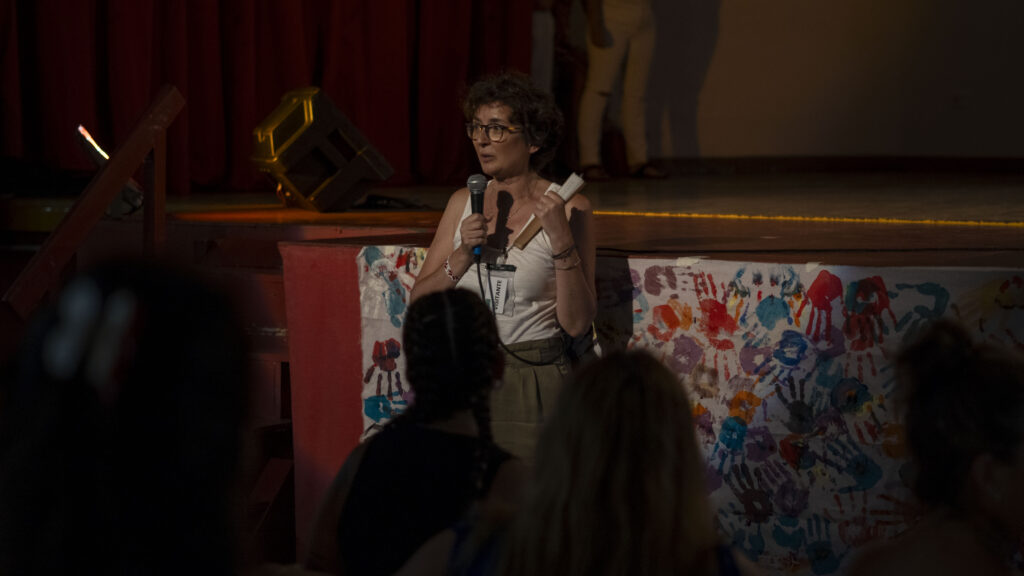
Rosana Gómez, FxJ project technician, presenting the final performance at the penitentiary center.
A safe space to express and share
For several months, twenty women have participated in a stage creation process based on the methodologies of Theatre of the Oppressed and the Forum Theatre, accompanied by Lidia Hervás y Paula Sánchez. Through body work, improvisation, and collective creation, the group has built a space of trust where they can share experiences, express emotions, and reflect on situations that are part of their life journeys.
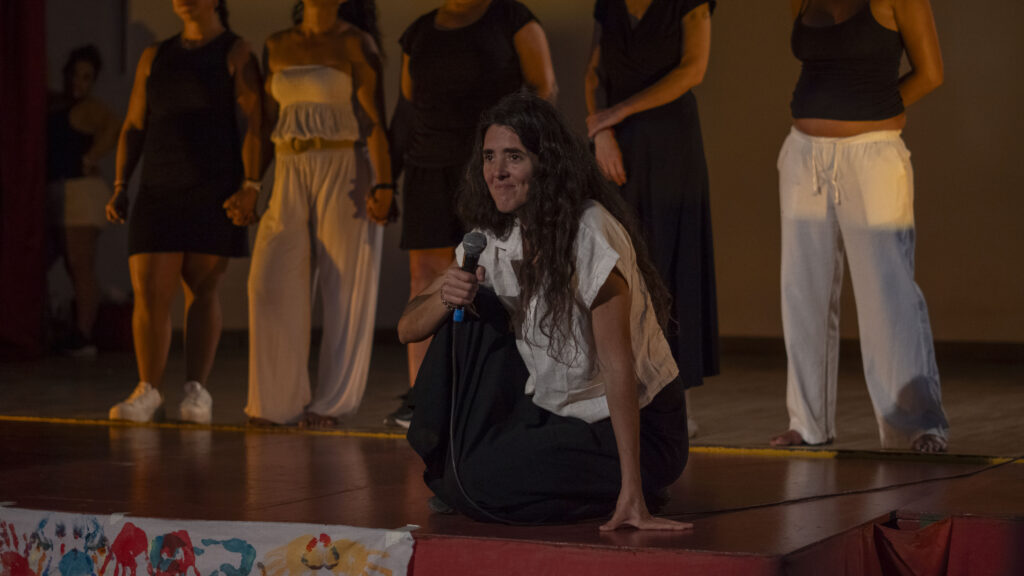
Paula Sánchez, facilitator of the workshops in the final performance
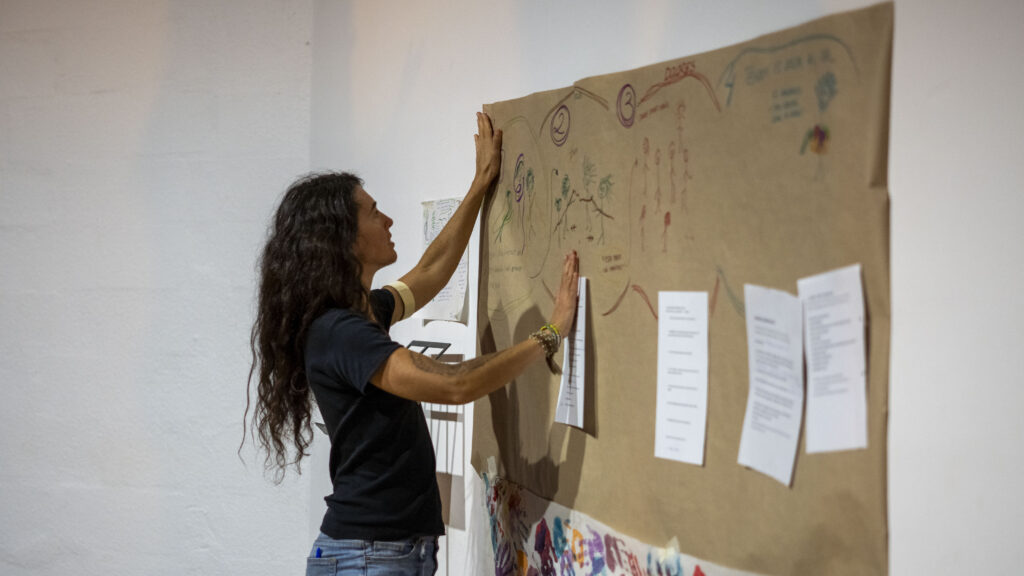
Paula Sánchez has just finalized the details before the play.
Theatre as a tool for social intervention
At Fundación por la Justicia, we understand art as a tool for social intervention capable of promoting participation processes, strengthening personal skills, and generating new ways of relating to oneself and others.
Therefore, the project places the participants at the center of the creative process. They are the ones who propose, build, and shape a work born from their own concerns, emotions, and experiences.
Beyond the artistic result, the process has allowed us to work on self-esteem, communication, mutual support and emotional expression from a participatory methodology.
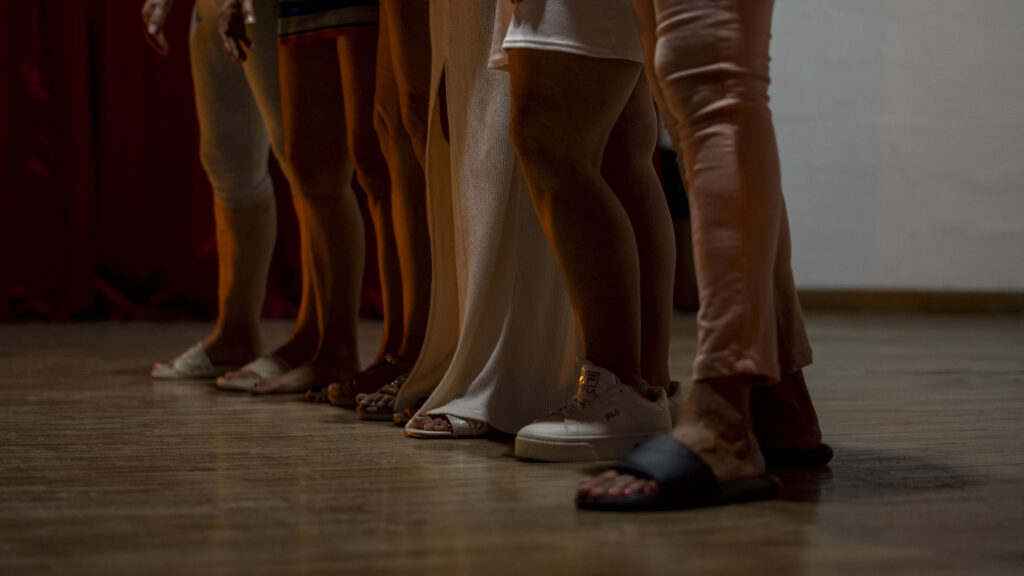 The project participants hold their final rehearsal before the performance.
A performance that concludes a shared process
The work done during the workshops culminated in a performance open to the public inside the prison itself.
The work, created collectively by the participants, represents the culmination of a process developed over several months and reflects the path taken by the group from the first session to the staging.
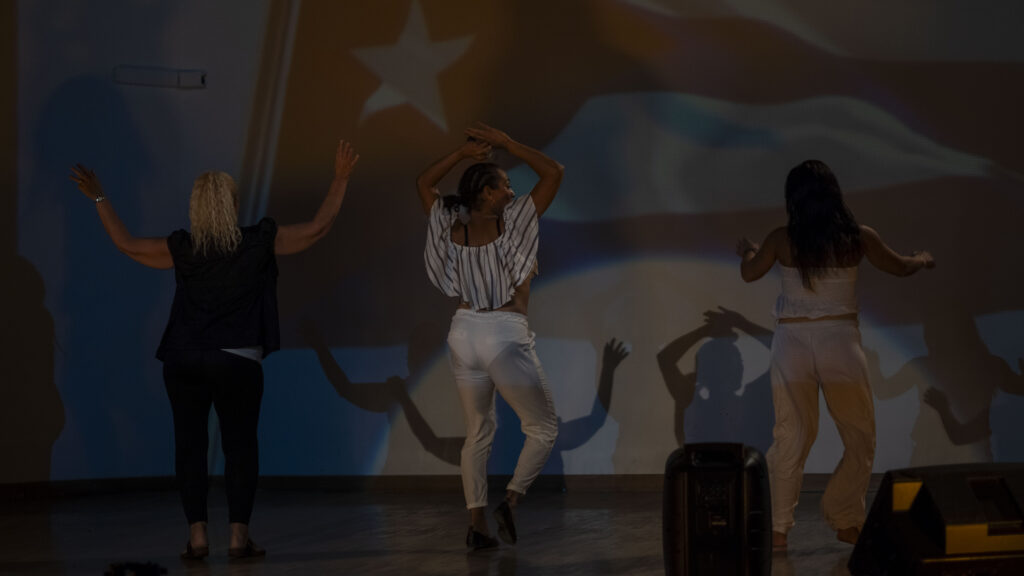
The participants practice their dance performance.
Creating opportunities even within walls
For years, the Foundation for Justice has been developing the program Futures in freedom, convinced that access to art and culture is also part of building a fairer and more inclusive society.
Through theater, audiovisual creation, body expression and other artistic disciplines, the program generates small spaces of freedom within a particularly complex environment, where participants can regain their voice, strengthen bonds and explore new forms of expression.
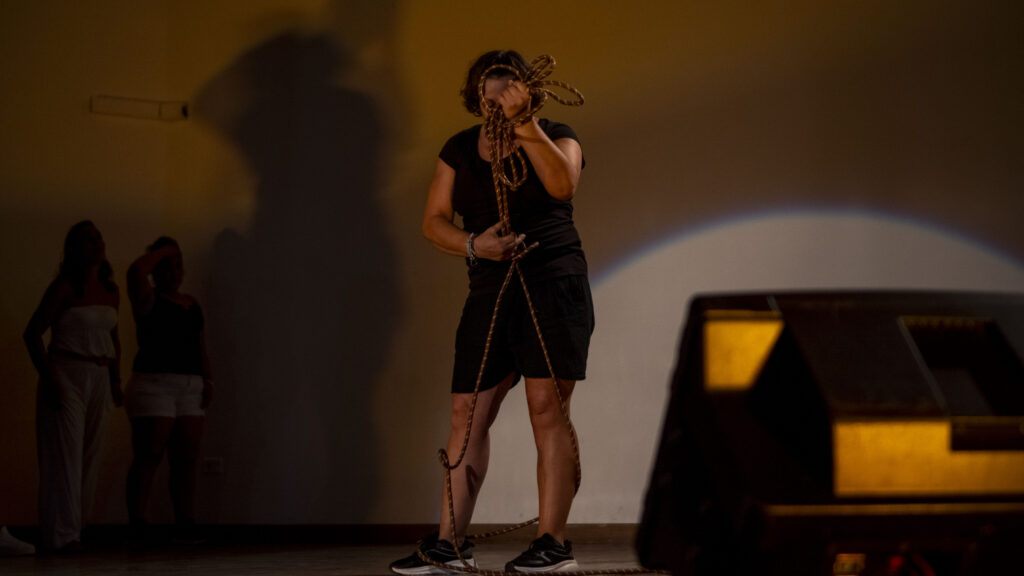
One of the women uses a rope as a symbol in the performance.