
Job placement
Labour rights are human rights, and the ability to exercise these rights in the workplace is essential for workers to enjoy a wide range of other rights, whether economic, social, cultural, political or otherwise.
This paragraph, taken from the UN Report of 20 October 2012 on labour rights, highlights the elements that characterise the right to work: On the one hand, it is a human right included in 1948 as a key element of the Universal Declaration of Human Rights and, on the other, it constitutes the basis for the realisation of many other rights. According to the Committee on Economic, Social and Cultural Rights, work has 3 dimensions: non-discrimination, physical accessibility and access to information, all of which are included both in the SDGs and, in one way or another, in the list of fundamental human rights.
LABOR INSERTION AS A RIGHT
This right applies to all citizens, regardless of their status or abilities.
For this reason, since its inception, Fundación por la Justicia has sought to launch various employment and self-employment projects aimed at strengthening its role as guarantor of the rights of all citizens with respect to access to work.
At a time when slogans such as "leave no one behind" resonate, it is essential to promote the employability of those groups that have greater difficulty entering the labour market, a circumstance that we could summarise in the following projects.
PROJECTS
Salamanca will be the sub-venue of the festival
Between November 11 and 13, the Center for Brazilian Studies and the Juan del Enzina Theater in Salamanca host the VI International Film and Human Rights Festival of Valencia. The Festival is a project of the Foundation for Justice that offers a...
“Punne” at Los Angeles Diversity Film Festival
The documentary "Punne", made by Pepo Ruiz and winner of the last edition of the International Film and Human Rights Festival, has been selected for the Los Angeles Diversity Film Festival. This film festival seeks to establish a...
On July 3, the short film Bikini will be screened at the Filmoteca
Next Thursday, July 3 at 8:00 p.m., the short film directed by Óscar Bernàcer will be screened in the Luis García Berlanga Room, with Uxua Castelló as artistic director, who is also part of the executive team of our festival. Uxua Castelló is...
Interview with Pepo Ruiz, winner of the last edition of the festival
We are with Pepo Ruiz Jover, director of the documentary "I have not been mutilated" and "Punne" (Albino), a work with which he won the last edition of the International Film and Human Rights Festival. What experience and memories did you take away from last...
World Day Against Child Labor
From the Valencia International Film and Human Rights Festival we join today, June 12, in the celebration of the World Day against Child Labor. In 2002, the International Labor Organization (ILO) declared this date with the purpose of...
WELCOME
The VI Valencia International Film and Human Rights Festival is an initiative of the Foundation for Justice, which we consider to be key to raising awareness of the Millennium Development Goals in society in general through art and...
Screening of documentaries at La Beneficencia
On Thursday, June 12 at 10:00 p.m., a documentary session on Human Rights will be screened. The event will be part of the Social Justice Cycle organized by the ICAV, the Foundation for Justice and the Provincial Council of Valencia. It will take place in...
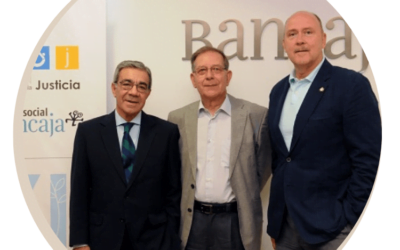
The Foundation for Justice and the Bancaja Foundation present their XI Prize to MAIDES
Tomorrow the Foundation for Justice and the Bancaja Foundation present the XI Foundation for Justice-Bancaja Award to the MAIDES Foundation. Its president, Jose Mª de Scals, held a meeting with the media today at the Bancaja Cultural Center in...
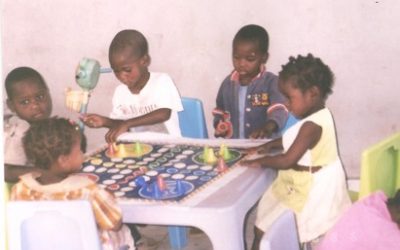
Mozambique: "Provision of water tanks at the Chiparango Children's Centre".
The project "Provision of water tanks at the Chiparango Children's Centre" contributed to improving the living conditions of children so that they could attend primary school in a safe and...