
Job placement
Labour rights are human rights, and the ability to exercise these rights in the workplace is essential for workers to enjoy a wide range of other rights, whether economic, social, cultural, political or otherwise.
This paragraph, taken from the UN Report of 20 October 2012 on labour rights, highlights the elements that characterise the right to work: On the one hand, it is a human right included in 1948 as a key element of the Universal Declaration of Human Rights and, on the other, it constitutes the basis for the realisation of many other rights. According to the Committee on Economic, Social and Cultural Rights, work has 3 dimensions: non-discrimination, physical accessibility and access to information, all of which are included both in the SDGs and, in one way or another, in the list of fundamental human rights.
LABOR INSERTION AS A RIGHT
This right applies to all citizens, regardless of their status or abilities.
For this reason, since its inception, Fundación por la Justicia has sought to launch various employment and self-employment projects aimed at strengthening its role as guarantor of the rights of all citizens with respect to access to work.
At a time when slogans such as "leave no one behind" resonate, it is essential to promote the employability of those groups that have greater difficulty entering the labour market, a circumstance that we could summarise in the following projects.
PROJECTS
Humans Fest brings to Valencia the best international cinema proposals on migration
The 13th edition of this festival, organized by Fundación por la Justicia, will be held from June 9 to 18. The deadline to submit feature films and short films to participate in the official section will be open from February 22 to April 22...

Foundation for Justice signs an agreement with the Montañes Foundation
The Montañes Foundation maintains the legacy of Mr. Juan de Dios Montañés after his death. His main works during his life were the Godella School House, placing emphasis on its educational nature, and the Ruzafa nursery and adult schools. More than 100 years of...
Defending human rights around the world and through film
On our planet the number of people fleeing wars, persecution and conflicts already exceeds 70 million, but, in addition to armed conflicts, insecurity, weak institutions and limited access to justice continue to mean...
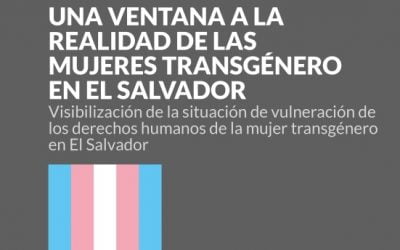
A Window on the reality of transgender women in El Salvador
The main victims of the most violent crimes in El Salvador are transgender women, whose life expectancy is 33 years. Since 1994, more than 600 people from this community have been violently murdered. Of the more than 100 reported cases of murder...

Majo Siscar takes the helm of Humans Fest
THE EDITION TRANSFERS ITS DATES TO JUNE The Valencia Human Rights Film Festival, Humans Fest, changes teams and takes the opportunity to take new directions. Last September, journalist Majo Siscar (Pego, 1983) took charge of a new team, which...
STATE PACT AGAINST CORRUPTION AND FOR CIVIC REGENERATION
STATE PACT AGAINST CORRUPTION AND FOR CIVIC REGENERATION
Benvingudes
A project planned to start in 2022 whose main objective is to promote the social integration of women victims of trafficking, potential applicants for international protection and their children, through a reception and comprehensive care system. In order to...

Who are Karla Avelar and Bianka Rodríguez?: know their story
Discover the story of Karla Avelar and Bianka Rodríguez: two trans women who fight for a more inclusive world for the LGTBI community in El Salvador. «Some values must be universal, such as Human Rights; equality and dignity of every human being....

What is happening in El Salvador with Human Rights?
On May 1, 2021, with the newly inaugurated legislature, Bukele's party, Nuevas Ideas, together with 8 allied deputies, dismissed the Magistrates of the Constitutional Chamber of the Supreme Court of Justice and the Attorney General of the Republic of El...